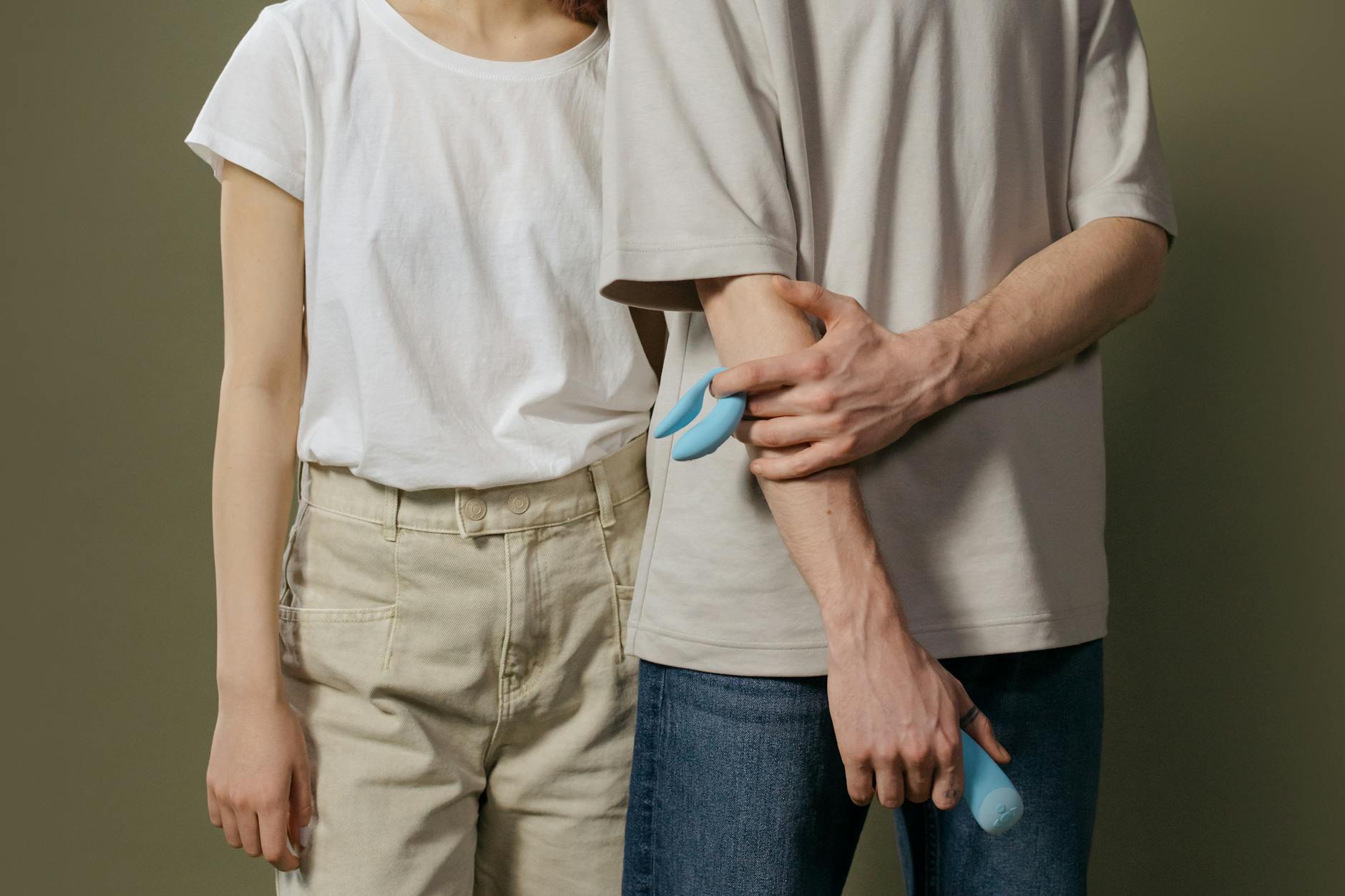
Your body's response to stimulation shifts. Tissue thins. Lubrication takes longer to build. Blood flow to the vulva changes. And your first instinct might be to think you need a stronger vibrator to compensate. You don't. In fact, the opposite is often true.
I've worked with hundreds of post-menopausal clients, and the ones who found their way back to pleasure fastest weren't using more powerful toys. They were using smarter ones.
A standard vibrator works through friction and direct pressure. It relies on rapid, intense movement to trigger nerve endings. That mechanism worked beautifully before menopause because your tissue was thicker, more elastic, and more forgiving of sustained pressure.
After menopause, everything's different.
The vulval and vaginal tissue becomes thinner and more fragile (a condition called genitourinary syndrome of menopause). The clitoris itself doesn't shrink, but the surrounding tissue gets less supportive. High-intensity vibration that once felt amazing can now feel too sharp, too raw, or even painful.
This is why many post-menopausal women report that their old favorite vibrators suddenly feel wrong. It's not that you've lost sensation. It's that your tissue has changed, and the tool needs to change with it.
Lemon clitoral vibrators, including the Lem vibrator, work through suction rather than direct friction. Instead of buzzing against tissue, they create a gentle seal and pulse gently, drawing the clitoris up into a soft chamber. The stimulation happens through that pulsing pressure, not through force.
This changes everything for post-menopausal bodies.
Suction-based stimulation bypasses the problem of tissue sensitivity. Because the technology doesn't rely on high-speed vibration against delicate skin, you get intense sensation without the mechanical trauma. The Lem vibrator and similar lemon adult toys are calibrated to provide graduated intensity—starting low and building gradually—which gives your tissue time to respond without shock.
Many women find that suction intensity levels 1 through 3 (instead of the 8 through 10 they used before menopause) feel not like a step down, but like discovering a completely new kind of pleasure. Deeper. More concentrated. More whole-body.
Here's the part most vibrator companies won't tell you. Your clitoris has roughly 8,000 nerve endings. Those don't go anywhere after menopause. What changes is the tissue surrounding them, which affects how stimulation reaches those nerves.
With high-intensity friction, you're relying on brute force to overcome tissue resistance. With suction, you're working with your body's own responsiveness. The gentle drawing sensation triggers nerves in a way that feels more aligned with how your post-menopausal body actually works.
This is also why a lemon sucker or clitoral suction toy often works better for sensitive skin across all ages. But for post-menopausal bodies specifically, it's not just better. For many, it's transformative.
One of the biggest mistakes I see is post-menopausal women staying loyal to high intensity out of habit, thinking lower settings aren't "real." Wrong. Intensity is a tool, not a measure of worth.
On a lemon clitoral vibrator like the Lem, intensity level 2 is not a softer version of intensity level 8. It's a completely different sensation pattern. Lower levels tend to create more of a rhythmic pulsing, while higher levels compress that rhythm into something faster and sharper.
For post-menopausal bodies, that slower pulsing often triggers deeper arousal. You're not rushing. You're exploring. And that changes the entire experience.
Start at level 1. Spend five minutes there. Notice what happens. You might find that levels 1 through 4 give you everything you need, and that anything higher feels unnecessary. That's not settling. That's optimization.
Before menopause, arousal might have ramped up in five minutes. Now budget 15 to 20 minutes. This isn't a loss. It's an expansion.
Warm-up matters because post-menopausal bodies need more time for blood flow to build, for lubrication to develop, for the nervous system to settle into receptivity. A lemon vibrator on level 1 during warm-up is actually perfect for this. You're not going for the finish. You're preparing the body to respond more fully when you do increase intensity.
Many women report that this slower ramp-up actually produces more intense orgasms, not fewer. Because your nervous system has time to build anticipation, to engage mentally, to feel safe. Those things matter more than you'd think.
Water-based lubricant becomes essential after menopause, not optional. Your body still produces some natural lubrication, but less of it, and it takes longer. Adding lubricant isn't admitting something's wrong. It's working with your body's real needs.
Apply it generously. Reapply during longer sessions. And here's the thing about lemon sexual toys specifically: because they work through suction, a good lubricant helps the seal form more easily and comfortably. It reduces any sense of drag or discomfort.
Use water-based only if you're using silicone lemon vibrators, which most clitoral suction toys are. Silicone-based lubes can degrade silicone surfaces over time.
Post-menopausal pleasure often requires a different mindset. Instead of building toward a specific goal, you're exploring sensation. Pressing pause frequently. Noticing what feels good in this moment, then adjusting.
With a lemon clitoral vibrator, this might mean spending two minutes at level 2, then pausing for 30 seconds, then switching to level 3 for a minute. Not because you're unsure, but because you're listening. Your nervous system will tell you what it needs. The job of a good toy is to deliver that smoothly.
Many women find that this exploratory approach leads to longer, more complex orgasms. Or to sessions where orgasm isn't the point at all. Just pleasure. Just aliveness.
If lemon adult toys or any stimulation consistently causes pain (not pressure or sensitivity, but actual pain), that's a signal. You might have genitourinary syndrome of menopause (GSM) that needs treatment. A topical estrogen cream prescribed by a gynecologist can completely change tissue health in weeks.
If desire has disappeared entirely despite physical comfort, talk to a doctor about testosterone therapy. It's underused in many places but deeply effective for restoring sexual interest.
If orgasm has become impossible, that might be medication-related or it might be emotional. Both are worth exploring with a therapist or sex educator.
But if you're simply finding that high intensity feels wrong and lower intensity with longer build-up feels right? That's not a problem. That's your body telling you how it works now.
Most post-menopausal women haven't lost sensation. They've lost rapid response. Suction-based toys like the Lem vibrator often trigger sensation that high-intensity friction missed because they work with tissue changes, not against them. If you genuinely have no sensation, that's worth discussing with a doctor. But that's rare.
Completely normal. Your tissue changed. Your needs changed. Needing intensity level 3 instead of level 8 doesn't mean you're getting weaker responses. It often means you're getting smarter ones. The goal is pleasure, not numbers.
Maybe. If it was a high-intensity vibrator, you might find it too harsh now. If it was a mid-range clitoral toy, you might adapt fine. But suction-based lemon vibrators are specifically designed to work with the exact tissue changes you're experiencing, which is why many post-menopausal women switch when they try them.
Three to six weeks of regular exploration, usually. Your nervous system needs time to recalibrate. If you're using a lemon sucker or similar tool consistently, you'll likely notice shifts around week two or three in what feels good and how quickly you respond.
Not at all. Some post-menopausal women find that partners can provide all the stimulation needed once you've relearned your body's responses. Others use lemon sexual toys sometimes, rarely, or regularly depending on the day. There's no "right" frequency.
Yes. You deserve pleasure as much as you ever did. The fact that it requires different tools or longer warm-up doesn't make it less real or less worth pursuing. Many women report that post-menopausal sex is the best sex of their lives. Not because the sensation is stronger, but because it's finally, fully theirs.
Menopause is a transition in how your body responds, not an ending. A lemon vibrator, whether you're exploring it for the first time or rediscovering pleasure generally, works with that transition instead of against it. The Lem vibrator and similar lemon clitoral vibrators are designed for exactly this moment in your life.
You don't need more power. You need alignment. You need tools that work with your tissue, not against it. You need permission to explore at your own pace.
If you're curious about whether a suction-based lemon vibrator might fit your body and your life right now, start with research, read reviews from other post-menopausal women, and give yourself time to experiment. Your pleasure has a second act. You're just learning how to direct it.