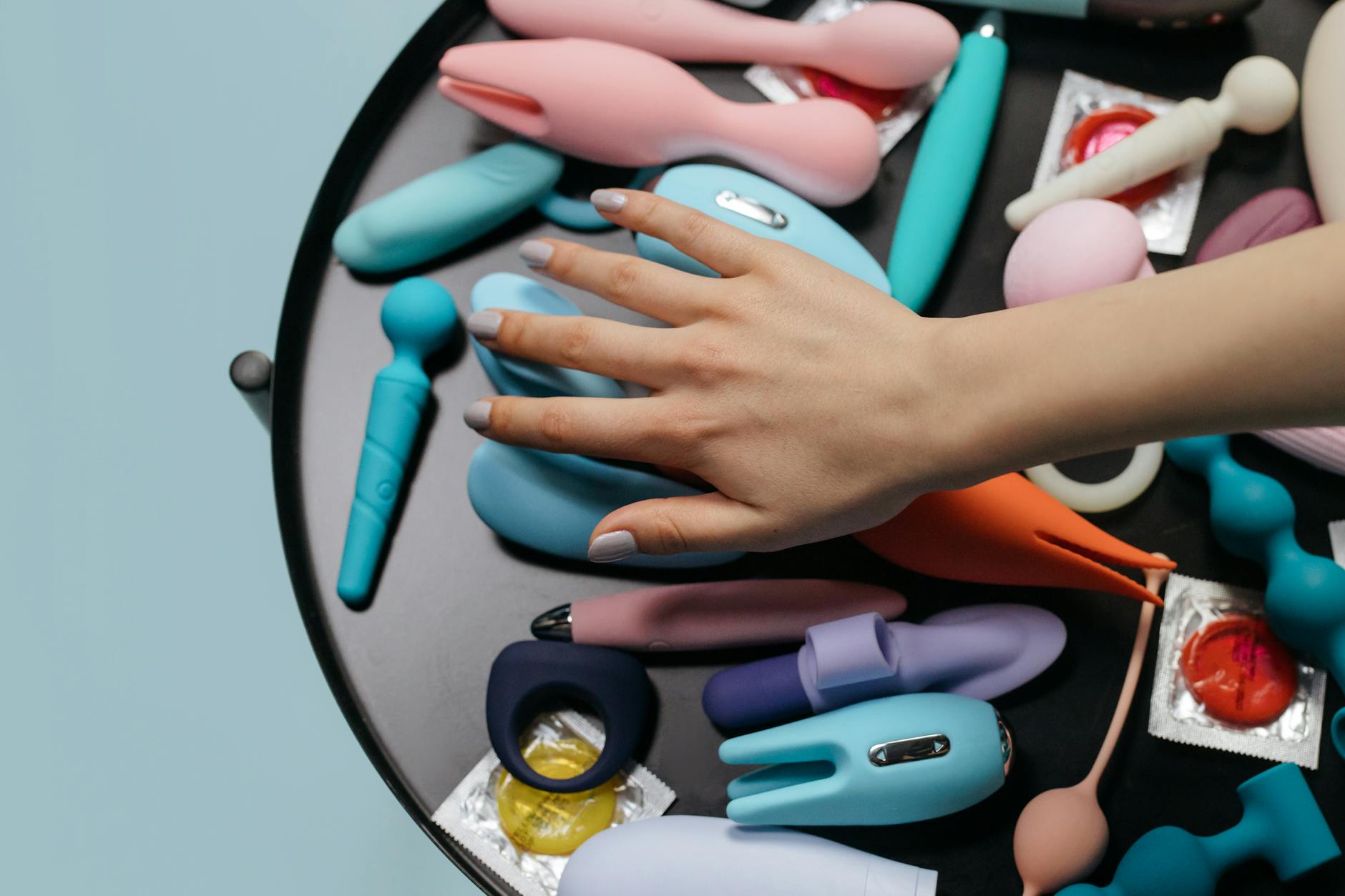
You're in bed, alone or with a partner. You reach for a lemon clitoral vibrator. And then your brain starts. The commentary. The comparisons. The old voices about what your body should look like, how it should move, whether you deserve this right now.
Suddenly pleasure isn't the point anymore. Not feeling self-conscious is. And that's a game you can't win.
Here's what I've learned from couples therapy, working with people across their lifespan: body image and sexual pleasure aren't separate problems. They're tangled together. The same nervous system that learned to be ashamed of your body is the one you need relaxed to actually experience sensation. You can't think your way into that shift. You need a different approach.
A clitoral vibrator like the Lem isn't just a tool. It's a permission structure.
When you use air-suction technology on your clitoris, something neurological happens. The intensity of stimulation is so direct, so focused, that your brain has to pay attention to sensation instead of running the usual commentary track. You can't simultaneously be thinking "my thighs look like..." and experiencing the chain reaction of an air-suction vibrator activating your clitoris. Neurologically, you don't have the bandwidth.
That's not magic. That's your parasympathetic nervous system taking over from your critical inner voice. And it happens faster with a powerful, focused sensation than it does with almost anything else.
The second reason: a lemon sexual toy removes the pressure of performance. There's no eye contact requirement. No need to "look sexy." No reading your partner's face. Just your nervous system and sensation.
Before you touch the vibrator, set up the space so your brain has one less thing to manage.
Lights matter. If bright overhead lights make you feel exposed, dim them. Candlelight, lamp light, or complete darkness all work. Your visual cortex stays quieter. Your interoceptive awareness (the sense of what's happening inside your body) gets louder.
Sound matters. If you're worried about being heard, use noise. A fan, music, white noise. Now your brain isn't split between sensation and listening for footsteps.
Time matters most. Block off thirty to forty minutes minimum. Not because you need that long to orgasm, but because your nervous system needs time to downshift from vigilance mode into pleasure mode. That transition takes about ten to fifteen minutes just sitting quietly. Rush it, and you're fighting your own biology.
One other thing: decide before you start that you're not trying to "prove" anything with an orgasm. That pressure (I have to come, I have to come hard, I have to come fast) is another version of body image perfectionism. It just wears a different mask. You're here to feel sensation. Full stop. Anything else is a bonus.
Start with your vibrator on the lowest setting. Not because you're building up to intensity, but because your nervous system needs a few minutes to recognize that stimulation is happening.
Place the Lem or whatever lemon clitoral vibrator you're using on your external clitoris. Don't rush into pressure. Just let the sensation register. Your brain is still checking in: "Is this safe? Is this happening?" Give it permission to relax.
Here's where something interesting happens. Within a couple of minutes, the self-consciousness often starts to lift. Not because you've suddenly decided you love your body, but because the physical sensation becomes more real than the thought. Your amygdala gets a piece of positive input and your vigilance system powers down.
If negative thoughts are still loud, that's information. It means your nervous system isn't ready yet. Move the vibrator slightly, breathe deeper, slow everything down. You're not fighting the thoughts. You're just making the sensation more interesting to your brain than the narrative.
After ten to fifteen minutes, your nervous system has usually settled. Now you can actually experiment.
Move through the patterns and settings on your vibrator methodically. Not performing for anyone. Not trying to hit some external standard of what you "should" like. Just: what pattern makes my body respond? What intensity feels good right now? What rhythm makes me want to stay with this sensation?
As you increase intensity, something almost always happens. The body image chatter gets quieter. Not because you're practicing self-love affirmations, but because your nervous system is genuinely occupied. A sensation that strong requires presence. You can't be self-conscious and deeply focused on physical pleasure at the same time. Those are competing neurological states.
This is why "just accept yourself" advice fails so badly. Your body image isn't a thought problem. It's a nervous system problem. You don't fix it by thinking differently. You fix it by experiencing sensation strongly enough that your nervous system has no choice but to come present.
Everything changes if someone else is watching. Body image spirals harder when there's a witness.
Here's what actually works: ask your partner to be in the room but not engaged. They can be reading, on their phone, or lying next to you quietly. Not watching. Not commenting. Just present enough that they're not a mystery to your nervous system.
This removes the performance dimension. You're not having sex for them. You're having pleasure in the presence of someone you trust. That's entirely different neurologically.
If your partner keeps trying to make it about them (jumping in to help, giving commentary, treating it like foreplay leading to partnered sex), pause and say what you need: "I'm working on something with my own nervous system right now. I'll let you know if I want you involved." That boundary isn't unkind. It's necessary.
Sometimes you'll be riding the sensation and suddenly a thought hits: "I'm getting too loud" or "I'm taking too long" or "He's judging my body."
Don't fight it. Don't spiral. Just notice it and redirect your attention back to sensation.
Here's a practical technique: mentally narrate what you're feeling instead of what you're thinking. Not in words you're saying aloud. Just internally. "Pressure in the center." "Heat building." "Pulse in the tissue." This keeps your language-based brain engaged in describing sensation rather than generating shame.
If thoughts keep pulling you back, it means your nervous system still isn't fully settled. That's okay. Lower the intensity and slow down. Give yourself another five minutes at a gentler pace. This isn't failure. This is information about where you are right now.
Here's the thing that changes everything: if you measure success by orgasm, you're still caught in a performance framework.
Success is: "I felt sensation without spending the whole time criticizing myself." Success is: "My body responded to pleasure." Success is: "I stayed present for five minutes straight." Success is: "I used a lemon clitoral vibrator and didn't hate myself after."
Orgasms are great. But they're not the point if they come wrapped in guilt or self-consciousness. You're rewiring your nervous system here. That takes time. Some sessions will be about presence. Some will be about sensation without climax. Some will be about learning what your body actually wants instead of what it "should" want.
The more you do this, the easier it gets. Not because your body changes. Because your nervous system learns that this context is safe. That pleasure isn't something you have to earn by looking a certain way.
Over weeks and months, something subtle shifts. When you reach for your lemon sexual toy, your brain doesn't immediately go to the critical commentary. It's learned that this space is protected. This is for sensation, not judgment.
That skill then starts transferring. Not everywhere, not all the time. But sometimes when you're with a partner, or naked in front of a mirror, or just moving through your day, there's a little more space between the thought and the belief. A little more room for your body to just be what it is.
That's what I'm actually talking about when I say pleasure heals body image. Not because positive thinking works. But because sensation is louder than shame when your nervous system is finally quiet enough to listen.
That's completely normal, especially the first few times. Your nervous system has years of practice being critical. It doesn't unlearn that in one session. Keep using your lemon clitoral vibrator in the same protected space. The brain learns through repetition. After five, ten, twenty sessions, the self-consciousness usually loosens its grip. If it doesn't, that might be a signal that you'd benefit from talking to a therapist about the underlying body image story. A vibrator is a tool for pleasure, not a replacement for deeper work if shame is severe.
Absolutely. Actually, one of the clearest reasons to use a lemon vibrator is exactly because you're uncomfortable with your body. Pleasure doesn't wait until you love yourself. You start using it now, in the discomfort. Your nervous system learns safety through the experience of pleasurable sensation, not through achieving a body image ideal first. That's backwards. You deserve pleasure right now.
It depends on the person, but most people notice a significant shift within four to six weeks of regular use. That's about ten to fifteen sessions. Your nervous system starts recognizing the pattern. This is a safe context. This is for pleasure. Then the internal critic gets quieter. Some people need longer. Some notice changes in two weeks. The timeline matters less than consistency. One session every other week will take longer to rewire your nervous system than a few minutes two to three times a week.
Yes, but context matters. If your partner is supportive and patient, it actually helps because you're in relationship while you rewire. The presence of someone who doesn't judge you while you're being vulnerable is powerful. If your partner makes comments about your body, rushes you, or treats your pleasure as foreplay instead of its own event, that will amplify shame. Build the solo practice first. Get comfortable with your body's response in a space where you're only accountable to yourself. Then bring the partner in once your nervous system is more settled.
Stop and check in. Shame getting worse usually means one of three things: you're not actually in a safe environment (someone could walk in, you're worried about noise, you don't have enough time). Your nervous system is dysregulated from stress or lack of sleep. Or you're approaching it from a performance mindset (I have to prove I deserve pleasure, I have to come hard, I have to be sexy). Shift any of those and try again in a day or two. A lemon sexual toy should make you feel better, not worse. If it consistently makes you feel worse, that's a signal to pause and maybe talk to a therapist about what's underneath.
You'll know by how you feel before and after. Not just physically, but mentally. After a session that works, there's usually a sense of ease. A little less chatter. A little more permission. You might feel more embodied. Less split between your mind criticizing and your body existing. That's the win. Not the orgasm. The quietness.
Let me be clear: using a lemon vibrator isn't a cure for body image issues. But it's one of the most direct ways to teach your nervous system that your body is capable of pleasure regardless of how it looks.
That's the throughline. Every session where you stay present instead of spiraling. Every time sensation wins over criticism. Every moment your brain chooses to feel instead of judge. That's rewiring. Not your thoughts. Your nervous system.
Body image gets quieter not because you think better of yourself, but because you're too busy feeling good to listen to the critic. That's the neuroscience. That's the practice. That's the permission.
Your body doesn't need to change for you to deserve pleasure. You already do. A lemon clitoral vibrator might just be the tool that finally convinces your nervous system of something your logical mind has always known.
If you're struggling with deeper shame around pleasure or your body, consider reaching out. Sometimes we need more support than a tool alone can offer. And that's not weakness. That's wisdom.
Poldrack, R. A., et al. (2008). The cognitive atlas: community-driven concept extraction and labeling. Journal of Neuroscience Methods, 181(1), 36-46.
Porges, S. W. (2011). The Polyvagal Theory: Neurophysiological Foundations of Emotions, Attachment, Communication, and Self-Regulation. W. W. Norton & Company.
Van der Kolk, B. (2014). The Body Keeps the Score: Brain, Mind, and Body in the Healing of Trauma. Viking.
Cash, T. F. (2012). Cognitive-behavioral perspectives on body image. In T. F. Cash (Ed.), Body Image: A Handbook of Science, Practice, and Prevention (2nd ed., pp. 39-46). The Guilford Press.