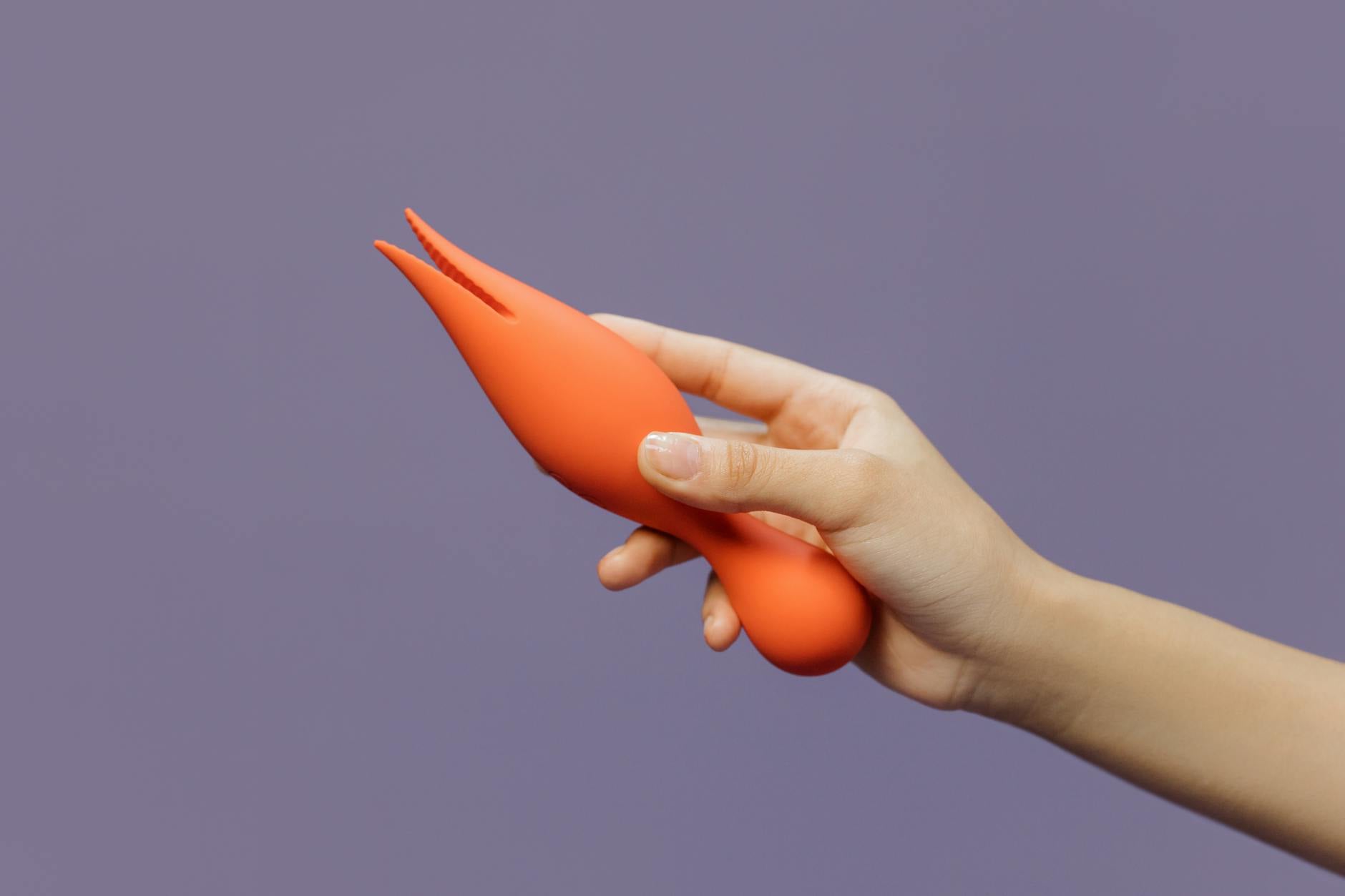
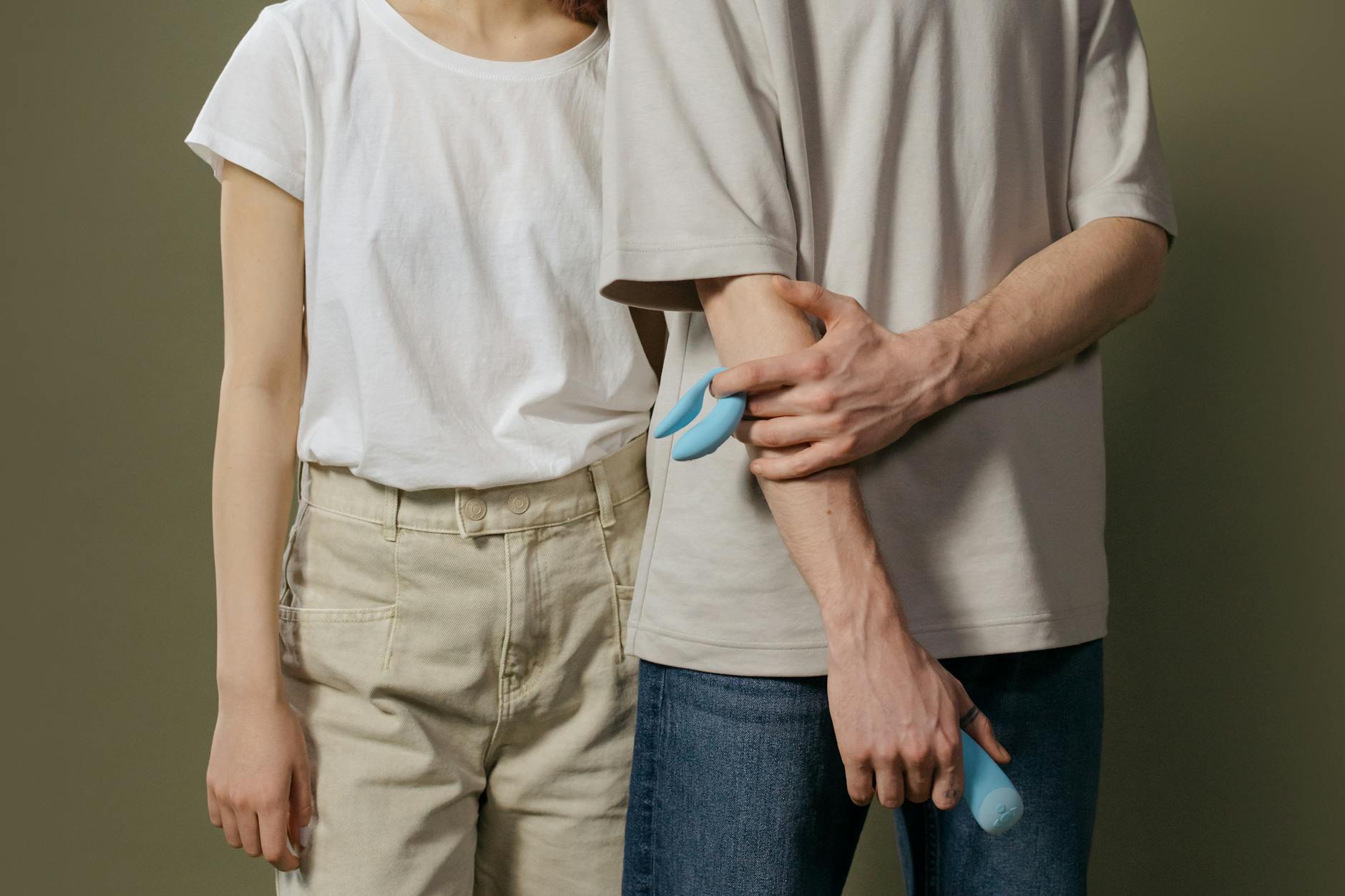
How to Use a Lemon Vibrator When You Feel Pressure to Perform With Your Partner
When anxiety hijacks arousal, the solution isn't trying harder. It's knowing how a clitoral vibrator can help you reclaim pleasure and rebuild intimacy without judgment.
The harder you try to come, the less likely it happens. The more you focus on whether your partner is enjoying themselves, the less you can feel anything yourself. Performance pressure isn't a minor mood killer. It's a direct neurological blocker. Your nervous system can't toggle between "proving something" and "feeling pleasure" at the same time. One has to go.
Most couples don't realize that adding a lemon clitoral vibrator into the bedroom isn't about "fixing" yourself. It's about breaking the anxiety loop. Here's how.
When you're worried about taking too long, seeming too eager, or not being sexy enough, your sympathetic nervous system lights up. That's your fight-or-flight response. Blood flows away from your genitals and toward your large muscles. Arousal flatlines. Then comes the shame spiral: "Why isn't this working? What's wrong with me?" And the next time you're together, the anxiety is worse because now you're anxious about being anxious.
This cycle is incredibly common, and it has nothing to do with your capacity for pleasure. It's a system problem, not a you problem.
Using a lemon vibrator like the Lem with a partner works because it interrupts the spiral. Suddenly, the focus shifts from "Can I come?" to "What does this feel like?" That tiny shift changes your whole nervous system state.
Before you add any toy into the bedroom, separate two conversations. The first is practical: "I'd like to use a vibrator together. It helps me relax and feel more." The second is emotional: "I want to rebuild trust around sex with you, and I need to know you're in this with me."
These sound similar, but they're different. One is about the tool. One is about the relationship.
Most couples skip the second conversation and jump straight to the vibrator, which sometimes works and sometimes makes everything worse because the underlying anxiety never gets named. If your partner is dismissive about toys, or you're worried they'll feel "replaced" or insulted, that's the conversation that needs to happen first. A lemon adult toy is a solution to a physical problem, not an emotional one.
Once that's clear, the vibrator becomes what it actually is: permission.
Start before you're already in bed together. Buy it, unbox it without drama, and mention it casually the next time you're kissing or touching. "I grabbed this. Want to try it with me?" Casual. Not a production.
When you do use it, these steps help:
Start with yourself first. Spend time alone with the lemon vibrator before you use it with a partner. Understand how you like it, what patterns work, how long you need. You're not learning "the right way." You're getting comfortable enough to relax when your partner is watching.
Let your partner hold it at first. This reverses the power dynamic. Instead of you proving something, they're participating in your pleasure. That changes how it feels emotionally. They're not observing your failure. They're part of your success.
Talk during, not after. "Lower" or "Right there" or "Slower" sounds awkward in theory and feels natural in practice. This also keeps you focused on what you're feeling instead of whether you're "performing correctly." You're literally narrating your own pleasure, which is the opposite of anxious silence.
If you don't come, that's fine. The goal isn't necessarily an orgasm. The goal is to reduce anxiety enough that you can feel something. That might be relaxation. That might be connection. That might be just not hating the experience. An orgasm will come later, once the nervous system settles.
Unlike traditional vibrators, lemon clitoral vibrators that use suction (like Hello Nancy's Lem) offer something different: they stimulate without requiring you to "perform" precision. You don't have to find the exact right spot. You don't have to hold still. The sensation is broader, which means your brain gets less in the way.
For people carrying performance anxiety, this is huge. With a suction-based toy, you can't really mess it up. You can't be doing it wrong. The sensations are more forgiving, and that forgiveness translates into nervous system relaxation.
The other benefit: because suction toys work differently than vibration, the sensation itself feels novel. Novelty actually quiets the anxiety brain. Instead of spiraling about whether you're taking too long, you're curious about what this feels like. Curiosity and anxiety can't occupy the same mental space.
Resistance usually comes from one of three places, and each one needs a different response.
"I don't want to feel replaced." This is ego, and it's real. Reframe it: "This helps me feel more, which means more pleasure for both of us. It's not a replacement. It's an upgrade." If they're still resistant after that conversation, the issue isn't the toy. It's that they're not actually interested in your pleasure, and that's a bigger conversation.
"That's weird." or "I'm not interested." Some people just aren't into it. That's fair. But if the performance anxiety is yours and your partner isn't interested in tools that help you relax, you have a compatibility question. Are they interested in your pleasure at all, or just their own?
"I feel like I'm failing you." Sometimes a partner interprets the vibrator as "I'm not enough." What's usually true is the opposite. You're trying to come, and your anxiety is getting in the way, not their skills. Reassuring them while you're both vulnerable is exhausting, but it matters. "I love you. This isn't about that. This is about my nervous system. Help me calm it down."
Performance pressure in the bedroom almost always mirrors something larger. Do you feel like you have to earn affection in the relationship? Do you apologize for things that aren't your fault? Do you shape yourself to please your partner and lose yourself in the process?
If so, a vibrator will help in the moment, but the real fix is boundary-setting and emotional honesty. You can't think your way out of a nervous system problem, but you also can't vibrator your way out of a relationship where you don't feel safe being yourself.
If your partnership is generally solid but the bedroom has become anxious, then the vibrator is exactly what you need. It breaks the cycle and gives you a win. That win restores trust. Trust makes vulnerability easier. Vulnerability makes pleasure possible.
If you've introduced a lemon vibrator with your partner and things feel worse, not better, pause. Talk about it without the toy present. Sometimes the anxiety is so deep that you need actual professional support. That's not a failure. That's wisdom. A sex therapist or a Gottman-trained relationship specialist can help you untangle what's underneath the performance pressure.
But for most couples, adding a clitoral vibrator like the Lem into your shared intimate life shifts something. The pressure releases. The pleasure returns. And you realize that the whole time, the problem wasn't you. It was a nervous system trying to keep you safe, and nobody showed it how to relax.
Yes. When you shift focus from "Am I doing this right?" to "What does this feel like?", your nervous system downshifts. Novelty and curiosity quiet the anxiety brain. Plus, if your partner is holding the vibrator or actively involved, it reinforces that this is collaborative, not a performance you're being judged on.
You're not broken. Your nervous system is doing its job too well. Anxiety is a feature, not a bug. It evolved to keep you safe. The issue is it's being triggered by something that shouldn't trigger it. A lemon clitoral vibrator is a tool to help your nervous system understand that intimacy is safe. That's it. Millions of people use them for this exact reason.
Completely normal. Anxiety floods your body with cortisol and adrenaline, which suppress the parasympathetic nervous system. That system is what powers arousal and orgasm. The more anxious you are, the longer it takes. A vibrator can help speed things up because the sensations are intense enough to quiet the anxiety chatter.
Then change it. Ask them to touch you while you use it, or have them use it on you. Or use it while you're both doing other things, like sitting together without making it the main event. "Being watched" and "being supported" are genuinely different. You get to decide which one feels right.
Yes, often. If you've been faking, there's usually performance pressure underneath. A vibrator gives you a real exit from the faking loop. You can honestly say, "This is what actually works for me," and your partner can feel good knowing they're actually helping. But this conversation requires vulnerability from both of you.
Start simple. "Sex has felt stressful for me, and I want to change that. I'm thinking about trying a vibrator because I think it might help me relax. Would you be open to that?" You don't have to diagnose yourself or make it a therapy session. Just name the problem and propose a solution. Most partners appreciate the honesty.
Performance pressure kills pleasure. It's not your fault, and it's not a personal failing. It's your nervous system doing too much. A lemon vibrator interrupts that cycle by shifting your attention from "Am I good enough?" to "What do I actually feel?" That shift is where the real healing happens.
Start the conversation with your partner. Use the vibrator together. Notice what changes. And remember: pleasure is your birthright, not something you have to earn.