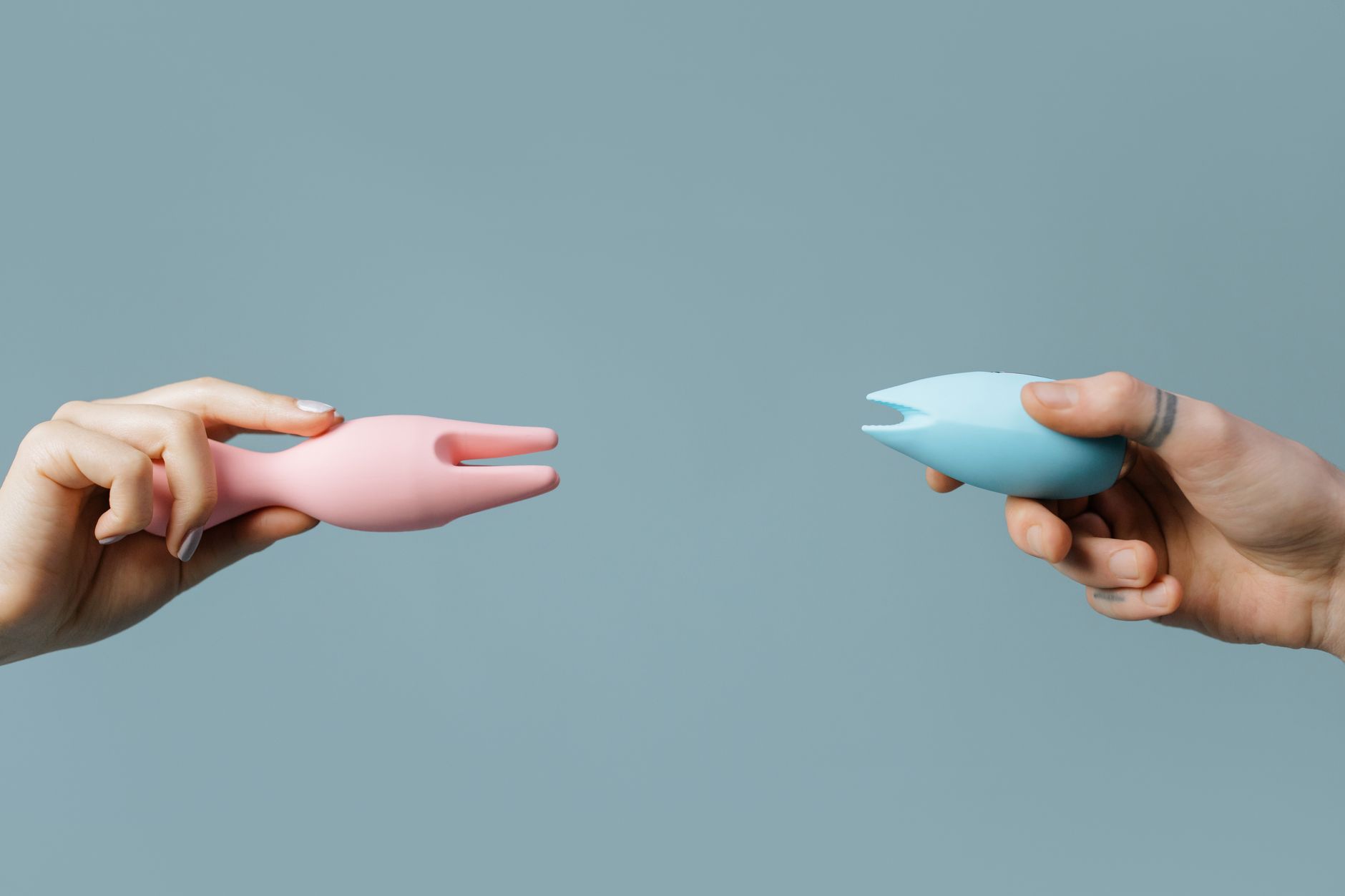
How to Use a Lemon Vibrator When Stress Kills Your Libido
When work, family, and life pile up, pleasure becomes invisible. Here's how a clitoral vibrator brings you back to yourself when stress has stolen your desire.
Stress doesn't just make you tired. It actively suppresses arousal at a neurological level. When your nervous system is stuck in fight-or-flight mode, your body literally cannot access the relaxation required for desire. This isn't a character flaw or a sign your relationship is broken. It's biology.
The cruel part is that sex could actually help with the stress. Orgasms reduce cortisol, boost oxytocin, and calm your vagus nerve. But you can't have sex if you don't want it in the first place. It's a catch-22.
That's where this changes: lemon vibrators like the Lem work differently than traditional vibrators because they work with stressed nervous systems, not against them. This guide shows you how to use one when stress has tanked your libido.
Your brain has a limited amount of attention. Stress consumes it all. When you're mentally cycling through deadlines, family drama, financial worries, or just the general noise of modern life, your prefrontal cortex (the thinking brain) is overdrive and your limbic system (the pleasure brain) is offline.
This is actually protective. Evolution didn't design your body to pursue pleasure during a crisis. But most modern stress isn't a short-term threat. It's chronic. You're stuck in low-grade panic for months, and during that time, arousal feels completely inaccessible.
Women report this more than men, partly because stress tends to affect estrogen balance and partly because we're socialized to handle more invisible labor. If you're managing a household, career, aging parents, kids, or all of the above, desire often disappears first.
Traditional vibrators require that you get aroused first. They intensify existing arousal. If you don't have arousal to begin with, they often feel like friction and pressure on a numb body. Which is frustrating and can actually deepen the sense of disconnection.
Clitoral vibrators from Official Lemon Vibrators work differently. They use pulse and suction patterns that don't require pre-existing arousal to feel good. You can be completely unstimulated and stressed, and the Lem will still wake up sensation without demanding that you "get in the mood" first.
This matters because it removes the performance pressure. You're not trying to get horny. You're just exploring sensation with no goal. That low-stakes approach is exactly what a stressed nervous system needs.
When you're stressed, full arousal might not show up. That's not failure. You're aiming for curiosity, not passion. Set the intention as "I'm going to spend 20 minutes reconnecting with my body," not "I'm going to have a mind-blowing orgasm." The second one puts pressure back on. The first one is permission.
You don't need candles and a playlist. You need 15 minutes where your phone is off and no one can interrupt. Lock a door. Get under a blanket. That's the entire requirement. Your nervous system is tracking threats constantly. Removing one threat (interruption) helps it downshift.
Start at pattern 1 or 2. Don't think of intensity as pleasure. Think of it as a gentle invitation to sensation. A stressed body is holding tension everywhere. Light, rhythmic suction tells your nervous system it's safe to let go. Spend 5-10 minutes just noticing what you feel, without trying to feel anything specific.
After a few minutes, you might feel arousal building. You might feel nothing. You might feel calm. All three are wins. The goal is to interrupt the stress loop long enough for your nervous system to remember that pleasure exists and that your body is safe.
Stress doesn't affect everyone's pleasure the same way. Understanding your specific response helps you use a lemon vibrator more effectively.
If stress makes you numb: You can feel physical touch but it doesn't register emotionally. Start with the suction setting on the Lem. Pulsing patterns tend to work better than steady vibration for desensitized tissue. The rhythmic nature helps rewire nerve pathways.
If stress makes you tense: Your pelvic floor tightens, arousal actually creates pain, and you shut down mentally. Start with the lowest intensity and pair it with long exhales. Seriously. Breathe in for four counts, out for six. Your nervous system responds to the breath pattern before anything else.
If stress makes you distracted: You start the process, then your brain goes back to worrying about email. This is the most common pattern. Use the Lem as an anchor. When your mind drifts, notice the sensation again. No judgment. It's a meditation.
If stress is couple-wide (you're both overwhelmed), the dynamic changes. There's often guilt layered on top. "I should want my partner. Why don't I?"
Here's what I tell clients: using a lemon vibrator solo during high-stress periods is actually better for your relationship. It keeps the pressure off your partner. It restores your sense of autonomy and pleasure. You're not asking them to fix your libido. You're taking responsibility for reconnecting with yourself.
Then, when you're ready, you have something to share rather than something your partner has to produce. That's a completely different dynamic.
Don't expect your libido to return the moment your stress decreases. Your nervous system is protective. It takes time to trust that the threat is really gone.
What usually happens: Week 1-2, you might feel nothing. That's normal. Week 3-4, you start feeling small shifts. A flutter. A tiny moment of interest. Not full arousal, but a signal that your body is listening again. By week 5-6, if the stressor is actually resolved (or at least manageable), most people report that desire is returning on its own.
But here's the important part. How to use a lemon vibrator when arousal feels slow to build is relevant here. Slow arousal isn't a problem to fix. It's information. Your body is telling you it needs slower activation. The Lem's lower settings are designed exactly for that.
Sometimes stress looks like the culprit, but something else is underneath. If your libido stays gone six weeks after a stressor resolves, something else is probably at play. That could be hormonal (postpartum, perimenopause, thyroid). It could be relational (unresolved conflict with your partner). It could be medical.
A lemon vibrator is a tool for reconnecting with sensation. It's not a treatment for depression, PTSD, or chronic relationship problems. If you suspect that's what's happening, talk to a therapist or doctor. The vibrator can work alongside other interventions, but it's not a substitute.
That said, clitoral vibrators are genuinely helpful for people on antidepressants or in therapy for trauma. They offer a way to explore sensation without the pressure of partnered sex. Many of my clients use them as part of their healing process. How to use a lemon vibrator when antidepressants affect sensation covers that in detail.
When arousal comes back after months of nothing, some people find it jarring. You've gotten used to numbness. Sensation returning can feel intense, vulnerable, or even anxiety-producing. That's completely normal.
Use lower intensities even when you're feeling aroused. Let your nervous system adjust gradually. There's no rush. Pleasure isn't a race.
Maybe. Some people can separate the two. Orgasm is a localized reflex that doesn't always require full-body relaxation. Others find that any level of stress blocks everything. Most people fall somewhere in the middle. Experiment without expecting a particular outcome. Pleasure during stress looks different than pleasure when you're calm, and both are valid.
Start with once or twice a week for 15-20 minutes. This isn't about habit-building. It's about giving your nervous system regular permission to feel pleasure. If it's helping, once or twice a week is enough. If stress is still acute, daily is fine. Just don't turn it into another pressure point. "I should be using this" is its own form of stress.
No. The opposite, usually. Solo exploration with a tool like the Lem helps you understand what your body actually wants. That knowledge makes partnered sex better and more authentic. You're not relying on your partner to produce arousal. You're bringing it into the relationship.
Absolutely, if you both want to. But be honest: if stress has killed desire, partnered sex might still feel like pressure, even with a vibrator involved. Solo time to reconnect first often works better. Then, once arousal is returning, bringing your partner in feels like addition, not rescue.
Not quite. Responsive desire means arousal builds as stimulation increases. You're not spontaneously turned on, but you get there. Stress-related low desire is more like arousal is completely offline. It's not responsive because there's nothing to respond with. The Lem helps wake up the system so that responsive desire can work again.
There isn't really one. Stress relief is pleasure. Pleasure is one of the body's most effective stress-management tools. You're not choosing between them. You're using sensation to downshift your nervous system, and that is the pleasure. It doesn't have to look like arousal or orgasm.
Stress is real, it's powerful, and it absolutely can tank your libido. But desire isn't gone. It's temporarily offline. A tool designed to work with your nervous system rather than against it, like a clitoral vibrator from Official Lemon Vibrators, helps you reconnect with pleasure when everything else is overwhelming.
Your body wants to feel good. Sometimes it just needs permission and a little time to remember how.
If stress is affecting your relationship or your sense of self, that's worth talking through with a professional. Reach out if you need guidance on what else might help alongside using a lemon vibrator.