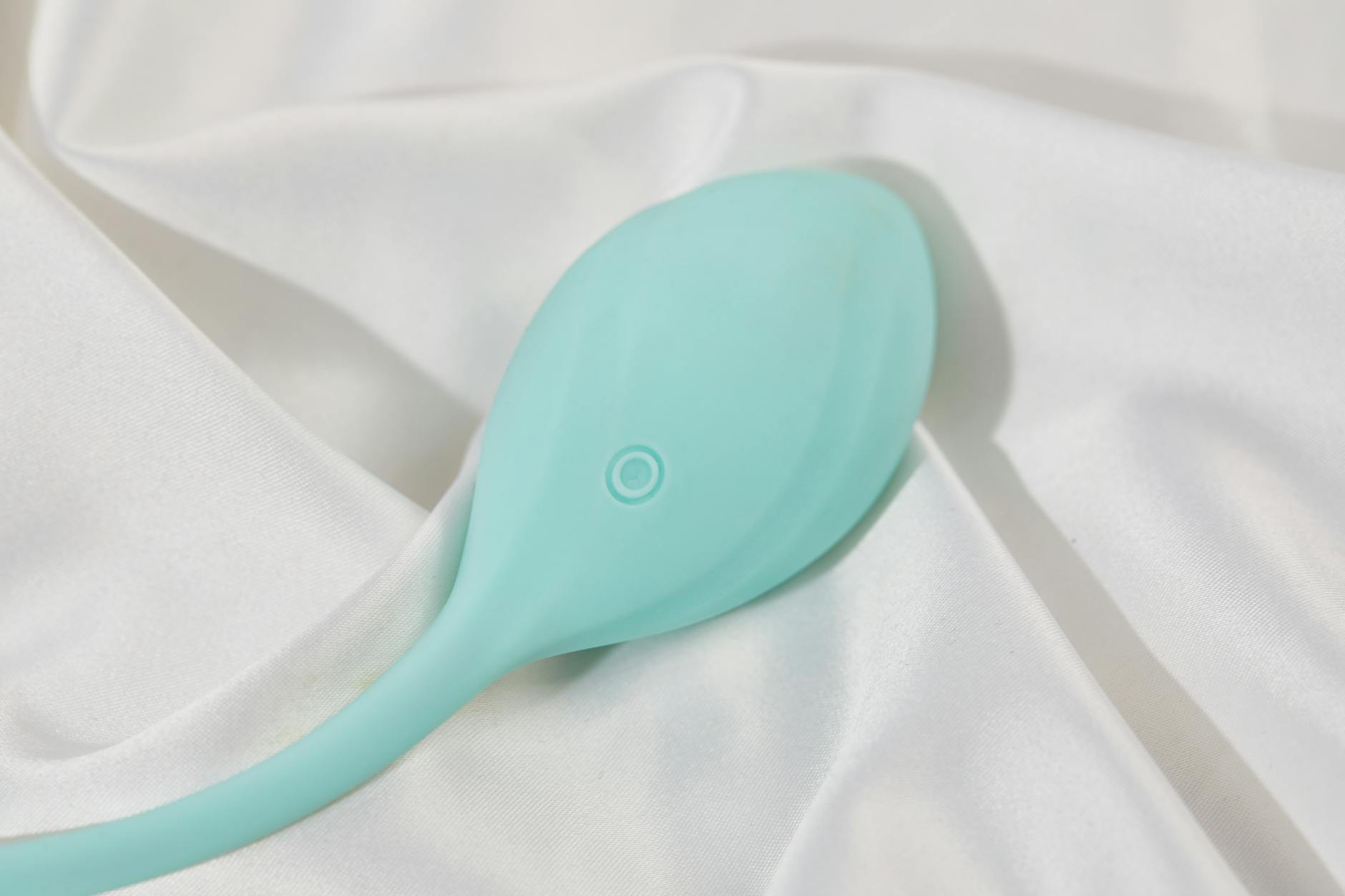
You haven't touched yourself in months. Maybe it's been a year. Maybe longer. Life happened. Stress, grief, a breakup, a health thing, exhaustion, kids in the house, a job that ate your brain, depression, a partner who made pleasure feel unsafe, or just the slow fade where one day you realized you couldn't remember the last time you felt anything down there at all.
When you stop touching yourself for a long time, a few things happen physiologically. Your pelvic floor tightens because it's not being used. Nerve sensitivity can actually dull without regular stimulation. The psychological part gets louder. You've built up a story about how awkward this will be, how much you've "lost," how weird your body probably feels now.
That story is doing more damage than the time off ever could.
The good news: nerve pathways don't go anywhere. Your clitoris has about 8,000 nerve endings, and they're patient. They're waiting. Your body hasn't forgotten how to feel pleasure. It's just been in quiet mode.
If you've been away for a long time, resist the urge to go straight to a lemon clitoral vibrator. I know it sounds counterintuitive. A clitoral vibrator is a precision tool, and right now your body is relearning its own language. You need to teach it to whisper before it's ready to shout.
Begin with touch. Your hand. No vibration. Spend three or four sessions just getting familiar with your own landscape again. Not trying to come. Not trying to get "turned on." Just touching, noticing. Warm water helps. A shower or bath removes the performance pressure because you're there for cleanliness too.
This takes ten minutes. Maybe twenty. You're not building toward anything. You're just introducing yourself again.
Once you can spend time with your own touch without anxiety, a Hello Nancy lemon clitoral vibrator becomes genuinely useful. The suction mechanism is gentler than traditional vibration because it's not relying on intensity to create sensation. It's creating a subtle seal and release that mimics how the body naturally responds.
Start with the lowest setting. Not because your body is broken, but because you're re-establishing a relationship with sensation. If you jump straight to pattern 4, you're overwriting the quieter signals your body's trying to send.
Let yourself explore at that low setting for a full week. Two weeks if you need it. This isn't procrastination. This is building confidence.
After a long break, the physical part is usually easy. The mental part is where people get stuck. You're telling yourself stories: "This is taking too long." "I should be able to come by now." "My body's not working right." "This is pointless."
Stop. Those thoughts are valid feelings, and they're also not true. Your body is working exactly as it should given what you're asking it to do. You're asking it to wake up from a long sleep. That doesn't happen in one session.
If you have a partner, don't tell them you're "trying to get back into it" or make this a Thing. Keep it private until you've rebuilt your own relationship with your body. Bringing someone else in, even with the best intentions, adds performance pressure that works directly against the slow, quiet process you're building.
After time away, your sensation can feel muted. You're using a lemon vibrator at the right setting, but it feels like you're touching someone else's body. This is normal. This is temporary.
Four things that help:
First, extend your warm-up time. Fifteen minutes of just breathing and touching, then introduce the vibrator. Arousal is what makes sensation louder. You're not trying to skip to the ending. You're building the whole path.
Second, change your environment. If you've only ever tried in silence in your bedroom, try music, or a podcast you find genuinely engaging, or even just the sound of the shower. Removing the silence removes some of the self-consciousness.
Third, stop looking for a specific outcome. The goal is not an orgasm. The goal is twenty minutes where you're present with your own body. That's it. If an orgasm happens, it's a bonus. If it doesn't, you still got what you came for.
Fourth, check your baseline stress. If your nervous system is in full fight-or-flight because of work or a relationship or money stress, no clitoral vibrator is getting through that. The lemon sucker can't outthink your brain.
If you've been away for a long time, rebuilding pleasure takes weeks. Not days. Weeks. Sometimes months if you're carrying a lot of tension or trauma.
Here's what a realistic progression looks like:
Weeks one and two, you're with your hand only, building basic comfort. Weeks three and four, you introduce the vibrator at low settings, keeping expectations loose. Week five onward, you start experimenting with what actually feels good. You might discover your preferences have changed. You might find you want different intensities than you used to. That's all information, not failure.
Some people come back faster. Some people need longer. Your timeline is not a reflection of how broken or healthy you are. It's just your timeline.
If you have a partner and you want to eventually bring them into your pleasure, that's a separate conversation from this one. Let yourself rediscover solo pleasure first. It's not selfish. It's foundational.
When you're ready to talk to your partner, the conversation is not "I've been masturbating." It's "I want to rebuild my relationship with my own body, and I'd love your patience while I do that." That's honest without oversharing, and it sets a boundary that says: my pleasure is mine to explore first.
If you spend three full weeks touching yourself regularly and sensation still feels completely absent, or if the idea of pleasure makes you feel genuinely distressed rather than just rusty, talk to a therapist who specializes in sexuality. Sometimes time away points to something deeper, like low-grade depression or unprocessed trauma, and that's not something a lemon vibrator can fix alone.
Similarly, if you're physically uncomfortable or in pain, that's a GP conversation, not a pleasure conversation. Rule out any medical stuff first.
Restarting after a long break can feel like admitting you've somehow failed at being a sexual person. You haven't. You're human. Life interrupts. Bodies change. Desires come and go. The fact that you're trying to come back to pleasure is not weakness. It's self-care in its most literal form: telling your own body that you matter, that your sensation matters, that taking time for yourself is worth doing.
Start small. Be patient. Use a tool that matches where you actually are, not where you think you should be. Your body will remember. You'll get there.