How to Use a Lemon Vibrator When Pleasure Feels Disconnected From Your Body
When your brain checks out but your body still deserves attention. A practical guide to grounding sensation and rebuilding the bridge between mind and pleasure.
Honestly, disconnection during pleasure is way more common than people admit. You might be fully aroused mentally. Your partner could be completely present. The setting is perfect. And yet somewhere between intention and sensation, you disappear. It's like watching yourself from three feet away, or feeling pleasure as though it's happening to someone else's body entirely.
This isn't broken. It's not weird. It's a protective response that shows up for lots of reasons: trauma history, chronic stress, grief, medication side effects, or just years of practicing "performance mode" instead of actual presence. The good news? Lemon clitoral vibrators, with their distinctive suction-based stimulation, can be a genuinely effective tool for retraining your nervous system to stay present in sensation.
Your body has learned to leave. Whether that happened over years or in a single moment, the pattern is now automatic. When arousal starts to build, your sympathetic nervous system (the fight-flight-freeze one) kicks in before pleasure can fully register. Your mind goes somewhere safer. Your body keeps going through motions, but you're not actually there.
This is especially common if you've experienced any form of sexual or relational trauma, but it also shows up for people dealing with ongoing stress, depression, or complex relationship dynamics. Some medications (particularly SSRIs) can flatten sensation in a way that makes staying present feel nearly impossible. And sometimes it's just learned habit. If you spent years having sex while thinking about the grocery list, your brain gets very good at that particular trick.
The disconnect feels safer because it is. But it also means pleasure stays shallow, orgasms become harder to reach, and intimacy gets lonelier even when you're with someone.
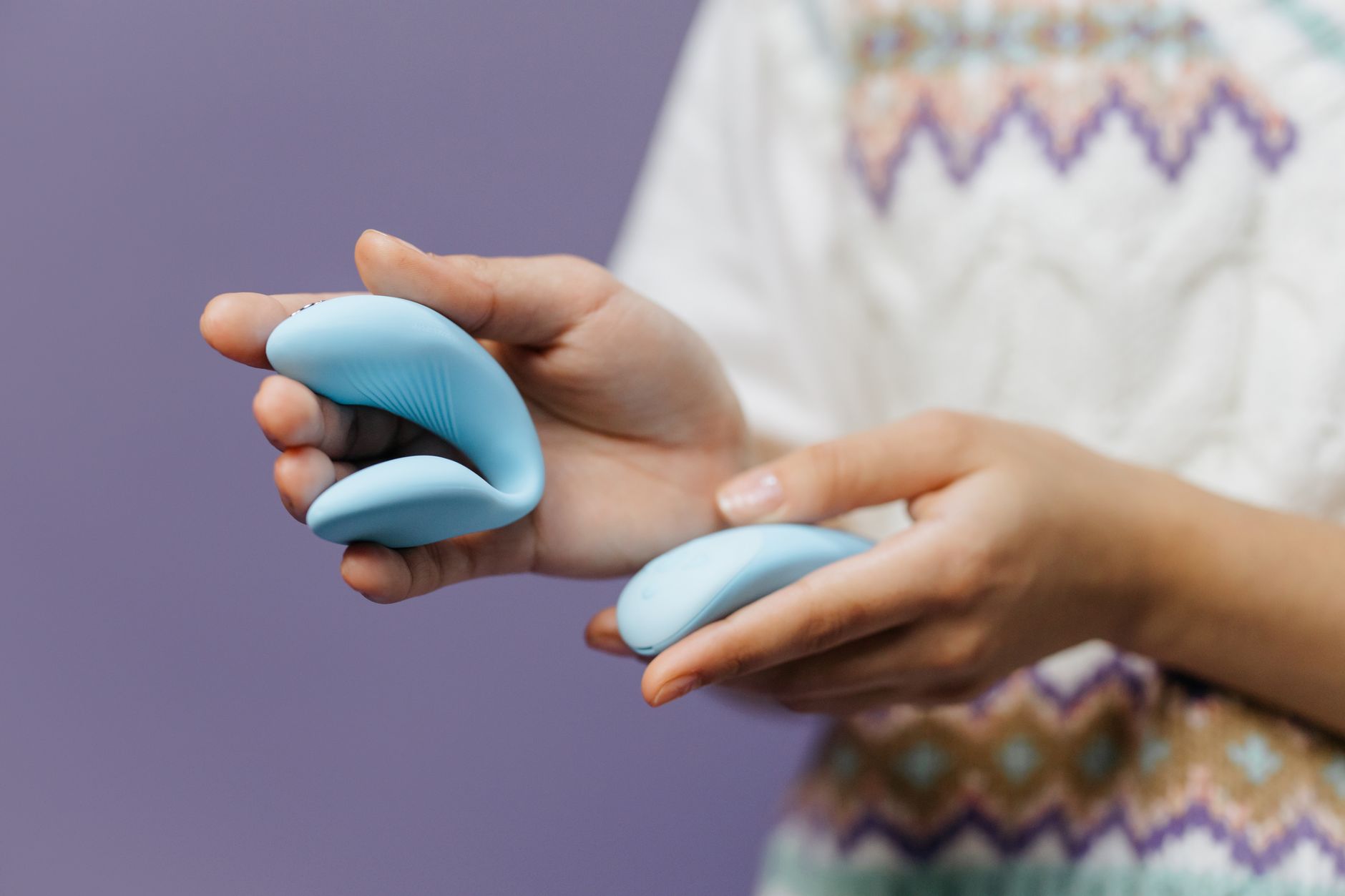
A lemon clitoral vibrator like the Lem works through suction and pulsation rather than traditional vibration. This matters for embodiment because suction creates a sustained sensation that's harder for your mind to ignore or dissociate from. Traditional vibrators can fade into background sensation. Suction keeps demanding attention.
The mechanism is simple: gentle, rhythmic suction over the clitoris without direct friction. This creates a unique kind of stimulation that activates nerve clusters in a sustained, almost hypnotic way. Your nervous system has to work to stay present with it. You can't phone it in.
Because air-suction stimulation doesn't rely on the numbing potential of intense friction, it's also easier to feel subtle variations in sensation. That micro-attention is exactly what rebuilds the mind-body connection. You start noticing small shifts instead of zoning out waiting for the big one.
If disconnection is habitual, don't start by trying to orgasm. That's adding pressure to an already difficult equation. Start by just feeling.
Set aside 20 minutes with zero orgasm agenda. Use your lemon vibrator on the lowest setting. Start at the top or side of the clitoris rather than direct stimulation. Notice: Does this feel numb? Sharp? Warm? Tingling? Don't judge it. Just narrate it to yourself like you're a scientist describing what a material feels like.
Many people who experience disconnection report that they stop feeling things in real time. They feel them later, in memory. So this exercise is about shortening that gap. You're teaching your nervous system that the sensation is real and safe to experience as it happens.
If your mind starts to wander (it will), notice that without judgment and bring attention back to the physical sensation. "I was thinking about work. Now I'm back to the feeling of suction on my left side." That's the whole practice. Attention is the tool. The lemon vibrator is just the anchor point.
Once baseline sensation feels steadier, you can start building arousal intentionally. The key is stopping frequently to reconnect with what's actually happening in your body, rather than pushing toward a goal.
Use your lemon vibrator for 3-5 minutes. Stop. Close your eyes. Notice the residual sensation. Can you feel your heartbeat? The temperature of your skin? The position of your body? Stay there for 30 seconds without stimulation. This is teaching your system that presence is sustainable, not just something that happens when something external is stimulating you.
Then go back to the vibrator. Maybe move to a slightly higher setting. Notice how the sensation changes. Stop again. Reconnect without stimulation. Repeat this pattern 4-5 times in a single session. You're not racing toward orgasm. You're building tolerance for staying present through arousal.
This sounds slow. It is. That's intentional. Reconnection takes practice the same way disconnection does. Your nervous system needs evidence that it's safe to stay present.
If you have a history of sexual trauma, disconnection during pleasure often isn't a choice. Your body learned to protect itself by leaving. A lemon vibrator can help, but it works best alongside some grounding practices.
Before using your clitoral vibrator, try the 5-4-3-2-1 technique: Name 5 things you can see, 4 you can touch, 3 you can hear, 2 you can smell, 1 you can taste. This is a standard trauma-informed grounding practice that activates your five senses and brings your nervous system back into the present moment.
Then use your lemon vibrator. If you notice dissociation starting (that feeling of watching yourself, floating, emotional numbness), pause. Do another round of 5-4-3-2-1. It's not failure. It's your body communicating its limits. Honor that.
Consider working with a trauma-informed therapist or somatic practitioner if disconnection is severe. A lemon vibrator is a useful tool, but it's not therapy. Both matter.
If you're exploring this with someone, communication is foundational. Tell your partner: "I'm working on staying present with sensation. That might mean we move slowly. It might mean I stop sometimes to notice what's happening. This isn't about you or what you're doing. It's about me rebuilding the connection to my own body."
A partner who gets defensive about slowness or stopping is telling you something important, and it's probably not safe to do deep pleasure work with them right now. This kind of vulnerability requires genuine safety.
If you have that safety, your partner can help by being present with you in a non-demanding way. They could hold you while you use your lemon vibrator. They could narrate sensation back to you: "I notice your breathing is getting deeper." They could slow down when you need to pause and reconnect. These small acts of witnessing help your nervous system learn that presence isn't dangerous.
Some people feel totally disconnected because sensation itself is muted. This happens with depression, anxiety medications, or chronic stress. In these cases, the goal isn't to find disconnection and fix it. The goal is to amplify whatever sensation is available.
Lemon clitoral vibrators are particularly helpful here because suction creates a different kind of stimulation than traditional vibration. If you've tried other toys and felt nothing, the Lem's mechanism might register where other toys didn't. But you might also need to experiment. Try different pressure levels. Different patterns. Different times of day when your nervous system is less activated.
If numbness is medication-related, talk to your prescriber about timing. Some people find that taking SSRIs at night means sensation is sharper in the morning. Others find that taking a day off (if medically safe) can help, though that's a conversation for your doctor, not an internet article.
Numbness doesn't mean you're broken. It means your system needs different input to register sensation. A lemon suction vibrator might be exactly that different input.
Rebuilding the mind-body connection during pleasure is slower than you want it to be. You probably want to feel normal by next week. Your nervous system is going to need longer.
Some weeks you'll feel deeply present. Some weeks you'll disappear halfway through and feel frustrated. Both are part of the process. You're not starting from zero, even though it feels that way. Every time you pause and notice what's actually happening in your body, you're building new neural pathways.
Use your lemon vibrator as a regular practice, not just when you're with a partner or when conditions feel perfect. Consistency trains your system faster than intensity. Three 15-minute sessions a week of actual presence beats one desperate hour of trying to force yourself to feel.
Your pleasure matters. Your body deserves your attention. And reconnection is possible.