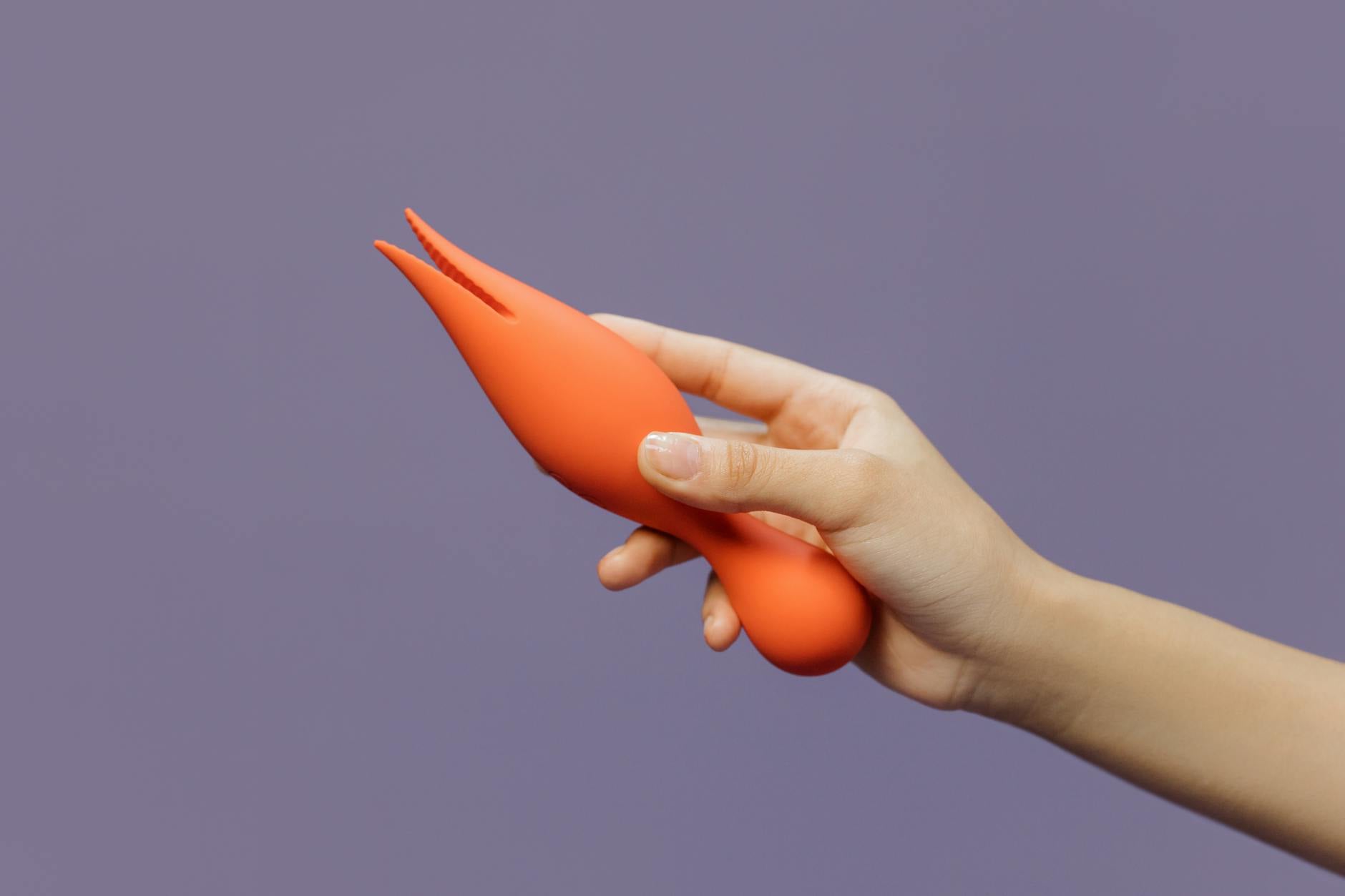
How to Use a Lemon Vibrator When Your Partner Prefers Manual Stimulation
Your partner thinks vibrators are unnecessary. Here's how to show them it's not about replacing their touch. It's about expanding what both of you can feel.
Here's the thing nobody says out loud: when a partner says they don't want to use vibrators, what they're often really saying is "I'm worried this means I'm not enough." That's not a sex toy problem. That's a reassurance problem. And that problem gets worse, not better, if you ignore it and sneak a vibrator into the bedroom anyway.
I work with couples where one partner is genuinely curious about lemon vibrators (or any clitoral vibrator) and the other sees them as a threat to their role. The good news? This is one of the easiest gaps to close. You just have to understand what's actually happening underneath the resistance.
When someone who's been manually stimulating you suddenly sees a vibrator, their brain doesn't think "innovation." It thinks one of three things:
"My hands aren't good enough." This is the most common one. They believe pleasure = their effort. A vibrator feels like evidence they've been doing it wrong.
"She's going to prefer the toy to me." Fear of replacement. Some partners worry that vibration will become the only way you can orgasm, and their hands will literally become obsolete.
"This is getting weird." Less common, but real. Some people have internalized messages that "real" sex means hands (or penis) only. Anything else feels artificial or unsexy.
None of these are about the lemon vibrator being a bad idea. They're about anxiety. And anxiety doesn't respond to logic. It responds to experience and reassurance.
Saying "I want to try a vibrator" is leading with the solution. What you actually need to do is lead with the problem. Try something like this:
"I've noticed that when you stimulate me manually, I can feel everything you're doing, but I also feel like I'm on a clock. I want to relax into this more. I want us to focus on sensation instead of whether I'm taking too long to come. Have you noticed that pressure too?"
Nine times out of ten, your partner will say yes. They have felt that pressure. And they've been trying to "fix" it by going harder or faster, which creates a feedback loop of tension.
Once you've named that shared experience, the conversation shifts from "you're inadequate" to "we're both trying to solve the same problem." That's when you can introduce the tool.
Let me be clear about what a clitoral vibrator does and does not do. It does not replace manual stimulation. It changes the dynamic.
When you use a vibrator like the Lem while your partner watches or participates, a few things happen at once. First, the physical pleasure increases because vibration stimulates nerves in a way sustained pressure can't. But second, and more important for couples, the pressure dissolves. Your partner isn't responsible for maintaining a specific rhythm or pressure. They can focus on other things: kissing your neck, touching your body, watching your face, talking to you.
This actually brings partners closer, not further apart. Instead of a performance (where your partner is concentrating hard on technique), it becomes an experience you share.
Here's what doesn't work: "Surprise, I bought a vibrator." Or worse, using one without mentioning it first.
Here's what does: "I found this thing I want to try together. It's not instead of you. It's a way we can both feel less pressure and more connected. Want to look at it with me?"
Show them the clitoral vibrator before you use it. Let them hold it. Let them turn it on. This removes the mystery and the shame. It's just a tool. The sexiness isn't in the object. It's in the fact that you both chose to use it together.
Layer it. Your partner uses their hands while you use the vibrator. This is not "you do this while I do that." It's both of you working together toward the same goal. Their hands can touch your thighs, your stomach, your breasts while the vibrator handles clitoral stimulation. The combination is often more intense than either alone.
Alternate. Ten seconds of their fingers, ten seconds of the vibrator, back and forth. This keeps them involved and engaged. They're not watching from the sidelines. They're actively choosing the rhythm and variation. Many partners find this way of using a lemon vibrator feels collaborative instead of competitive.
Use it as foreplay, not the main event. Start with manual stimulation, build arousal, then introduce the vibrator as you're getting close to orgasm. This frames it as an enhancement, not a replacement. Your partner gets to bring you to the edge with their hands, and then you both experience the intensity together.
After you've used a vibrator together once or twice, the resistance usually softens. But you have to actively reinforce why you still want their hands.
Tell them specifically what you love about their touch: "I love that you know my body. I love that you can feel when I'm tense and adjust. I love that you're here with me." Don't just say "you're still important." Show them. Ask them to use their hands while the vibrator is going. Make them feel like a partner, not a backup.
The couples who struggle most are the ones where the partner with the vibrator assumes acceptance. They try it once, their partner tolerates it, and they move on. But that partner is still anxious. They're just being quiet about it. Check in. Ask them what feels good. Ask them what worries them. Do that work.
Sometimes you'll have a conversation, show them the vibrator, suggest trying it together, and they'll still say no. That's not a sex toy problem either. That's a compatibility problem. And it's worth taking seriously.
If vibrators are something you genuinely want to explore, and your partner is immovable, you have a real decision to make. You can accept that this is a boundary for them. You can try to persuade them. Or you can recognize that you might have different approaches to pleasure that aren't going to reconcile.
I'm not saying "break up over a vibrator." I'm saying if you want to integrate lemon vibrators into your sexual life and your partner sees them as categorically wrong, that's worth a real conversation, maybe even with a couples therapist who specializes in sex and intimacy.
Most partners come around once they understand it's not about inadequacy. They see their partner relax. They feel the shift in the energy. They realize the vibrator isn't a threat. It's permission to enjoy sex differently.
Yes, absolutely. The vibrator can stimulate the clitoris while your partner penetrates, which creates a sensation many people find intense. Some partners worry this will make them feel like they're not doing enough. Frame it as enhancement, not compensation. "I want to feel everything at once" is very different from "I need the vibrator to come."
This worry is incredibly common, and you address it through action, not words. Use the vibrator with them present and engaged. Ask them to use it on you. Make it collaborative. And separately, maintain plenty of partnered sex without any toys. Show through your behavior that you still want their hands, their body, their presence.
Completely normal. Some women feel the same way if their partner uses a vibrator. The threat isn't about gender. It's about fear of inadequacy. Anyone can feel it. The antidote is the same: communication, collaboration, and reassurance through repeated positive experiences.
Most partners come around after one or two collaborative experiences. If your partner has tried it with you and still refuses to engage, their resistance might be rooted in something deeper. Religious beliefs, past trauma, or genuine incompatibility around sexuality. That's worth exploring with a therapist, not just accepting as a permanent boundary.
Yes. Your solo pleasure is separate from your partnered pleasure. You can use a lemon vibrator when you're alone without it having anything to do with what happens in the bedroom with your partner. Just be honest about it. Secrecy creates way more damage than openness does.
That usually means the introduction wasn't collaborative. Go back to the conversation. Ask what felt bad. Listen without defending. Sometimes it's a genuine boundary. Sometimes it's anxiety that can be worked through. Either way, you need to understand what happened before you try again.
When a partner moves from resistant to curious, it's not because the vibrator changed their mind. It's because they felt heard, reassured, and included in the decision. They got to experience their partner's pleasure without it being a performance or a test of their competence.
That's when lemon vibrators actually transform a relationship. Not because the vibration is magic. But because the conversation you had to get there was honest. You named the anxiety. You addressed the fear. You made it collaborative.
That's what actually brings couples closer. The toy just happens to be the reason you had the conversation in the first place. Want to explore this further? We're here to help you think through the next step. Reach out through our contact page.